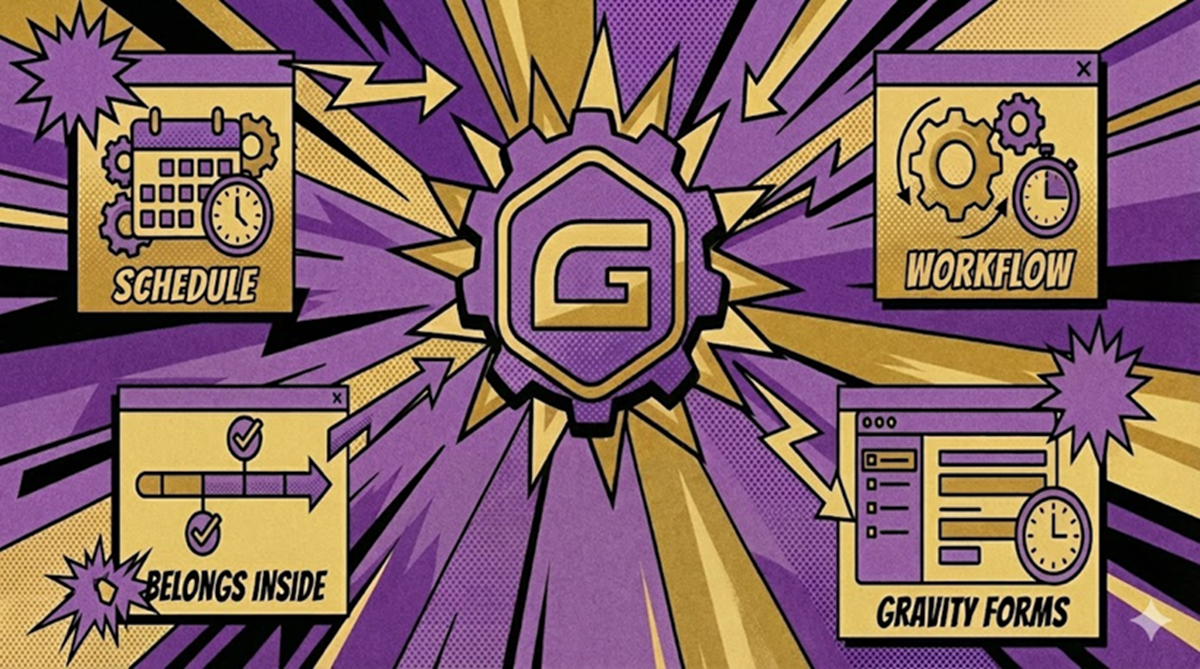
If the information collected by Gravity Forms is going to matter, it has to be usable right away for your team. A submission that sits in an inbox, waits in an entry list, or gets forwarded three times before anyone acts on it is not helping you run the business. It is stored intention. That delay quietly increases cost because decisions wait for attention. The fastest way to make that intention useful is to turn it into assigned work, and that is what Asana is built to hold: tasks with owners, timelines, and a visible place in the day’s workload.
The Moment Gravity Forms Stops Being “Just Intake”
Gravity Forms is excellent at what it was built to do: collect structured information. It asks consistent questions, enforces required fields, and produces entries that are clean and readable. The friction shows up after the entry exists. In most organizations, the entry becomes a handoff. Someone opens the notification, scans the submission, decides what it means, and then recreates it as work somewhere else.
That manual step sounds small, but it controls everything you care about. Response time depends on when someone happens to notice the submission. Consistency depends on how that person interprets it. Visibility depends on who they remember to tell. Gravity Forms didn’t fail here. It simply did its job and stopped. Execution is a different job.
The Paradigm Shift
A form submission is not the end of communication. It is the start of execution. Once you see that, the “next step” after intake stops being “notify the right person.” The next step becomes “create assigned work.” Notifications are helpful, but they are not a workflow. Assigned tasks are a workflow, because they create ownership, make status visible, and give the request a place to move forward without relying on memory.
Why Asana Is the Natural Next Place for Form Data
Asana fits the second half of the equation because it answers the questions Gravity Forms is not trying to answer. An entry tells you what was submitted. A task tells you what will happen next. That’s why the mapping is so natural: the form creates clarity, and Asana makes that clarity actionable.
Here’s what Asana adds that an entry list or notification can’t reliably provide on its own:
- Assignment: one person owns the next step
- Due dates: urgency becomes explicit instead of implied
- Status visibility: work is clearly open versus completed
- Context in one place: discussion and updates stay attached to the work
- Organization by bucket: projects and sections keep similar requests together
- Repeatability: similar requests can follow a consistent structure over time
None of this requires turning your forms into a complicated system. It simply means recognizing that Gravity Forms produces inputs that are already task-shaped. Asana is the environment where task-shaped inputs belong.
What Happens When They Stay Separate
When Gravity Forms and Asana stay separate in your operational thinking, the same problems repeat. Entries live in admin screens and inboxes, so the only people who can reliably see the work are the people who know where to look. Ownership is implied instead of assigned, so requests drift until someone takes initiative. Follow-ups scatter across threads, so the request becomes harder to understand over time. And a basic management question becomes hard to answer: what is still open right now?
The symptoms are usually predictable:
- submissions get acknowledged but not owned
- work gets routed through forwarding instead of through a queue
- follow-ups live in side messages instead of with the request
- “what’s happening with this?” becomes a recurring question
- the team loses a clear picture of what’s active versus completed
At low volume, teams compensate with effort. They forward emails, maintain side spreadsheets, or keep personal notes. At higher volume, that effort becomes a tax. It costs time, creates errors, and adds stress because nobody trusts the system to reflect reality. The data may be stored correctly, but the work is not organized as work.
The “Natural Integration” Mindset
The integration starts as a decision, not a technical setup. Gravity Forms is the structured request layer. Asana is the assigned execution layer. A submission is a task request. A task is accountability plus visibility. Once you adopt that mapping, your website stops being a place where requests disappear into archives and becomes a place where requests enter your team’s workflow.
This also reframes how people think about Gravity Forms integrations in general. Many “integrations” are really attempts to recover from the same breakdown: the request arrived, but the work never took shape. When you decide that every meaningful submission should become assigned work, the tools stop feeling separate. They become two halves of one operational loop.
A Simple, Neutral Scenario
Imagine a request form on your site. The request could be external or internal; the label doesn’t matter. What matters is that the submission requires action from someone on your side. The form collects a short summary, a category, an urgency level, and supporting details that prevent back-and-forth.
In an intake-only setup, the submission creates an entry and an email. Someone reads it, then manually creates a task, assigns it, and tries to keep track of it while more submissions arrive. That person becomes the router, and the process depends on their attention.
In a task-first setup, the next step is to create a task right away so the request enters the same place your team already manages work. The request is visible, owned, and trackable. The owner sees it in their normal task list. A manager can see the queue without asking for updates. If clarification is needed, it happens in one place, attached to the work, without rewriting the request across multiple channels.
The form did not become more complicated. The data did not become more valuable. The difference is that the data became usable right away because it entered a system designed to carry execution.
The Point People Miss About Gravity Forms Integrations
Most people go looking for integrations after the pain starts. Submissions slip. Emails pile up. Someone realizes that “we got the data” is not the same as “we handled the work.” Then the hunt begins for a connector.
But the deeper move is conceptual. Decide that meaningful submissions should become trackable work by default. That decision changes what you build, what you measure, and what you consider “done.” It also changes what you expect from Gravity Forms: not just collection, but the first step in a workflow.
Final Thoughts
If you already rely on Gravity Forms to collect structured information, it makes sense to pair it with a system that turns structured information into owned action. Asana is built around assignment, timelines, and visibility, which makes it a natural partner once you stop thinking of submissions as messages and start treating them as work requests.
Keep the next step small. Pick one form you already use where a manual task always happens after submission. Identify that first manual step—the moment someone reads the entry and turns it into “who will do what next.” That seam between intake and execution is the whole idea. Once you see it, you have the mindset: submissions should become tasks. Everything you build later is simply a cleaner way of making that happen.
Got a more questions about using Gravity Forms and Asana? Reach out to BrightLeaf Digital and we’ll do our best to help you.