
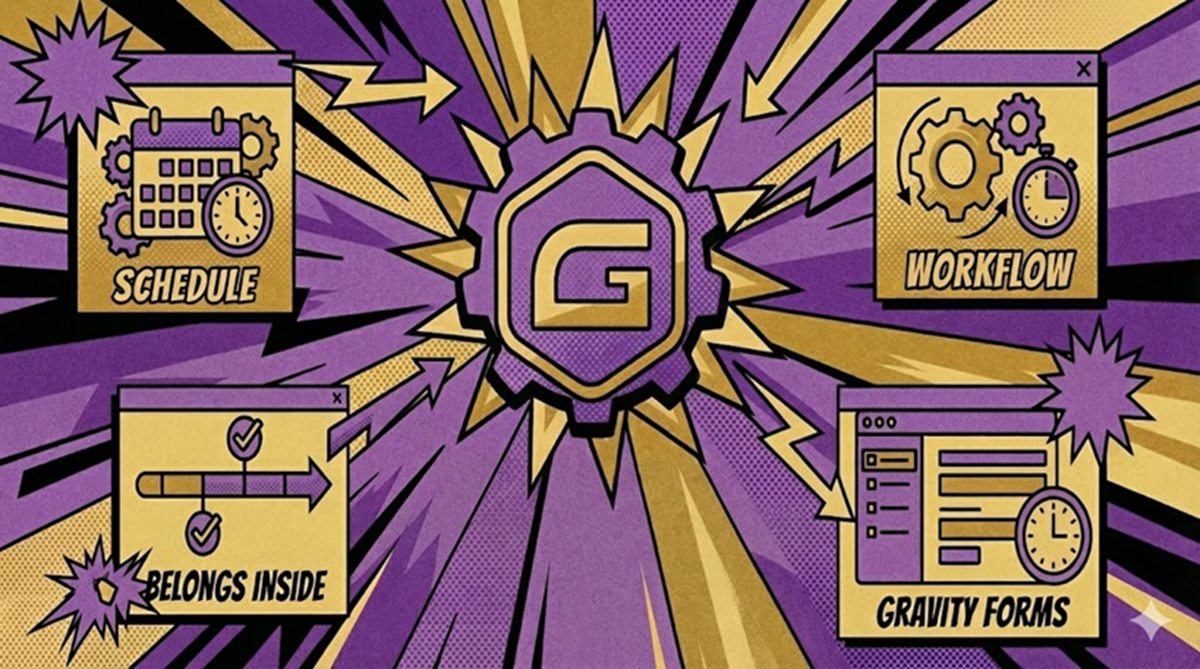
Every organization runs work on a schedule. Monthly invoicing, recurring expense reviews, monthly revenue snapshots, quarterly financial reports, internal audits. These financial processes repeat with a predictable rhythm. Yet in many teams, they live in a patchwork of calendars, Slack reminders, spreadsheets, email nudges, and personal notes. What should be a structured operational cycle turns into a scattered set of individual reminders.
That fragmentation carries a cost. Each cycle requires the team to reconstruct the same process from scratch: pulling data, requesting numbers, chasing confirmations, and rebuilding the same reporting or approval steps. Steps are skipped. Hand-offs are unclear. Managers lose visibility because the workflow doesn’t live where the operational data lives.
The organization ends up depending on memory rather than systems, which introduces inconsistency and delay. Over time, the friction compounds, and the business spends more time chasing numbers than managing performance.
The problem is not the schedule itself. The problem is where the scheduled workflow lives.
Why This Matters
When repeating workflows, especially financial ones, are driven by ad hoc tools instead of a central system, the impact is felt directly in cash flow and decision-making:
- Repeating workflows lose structure when they’re managed informally.
- Teams rely on manual reminders, increasing variability and missed steps in critical cycles.
- Managers cannot oversee month-end or quarter-end processes that sit outside the systems they are responsible for.
- Staff hours are spent recreating the same invoicing, reporting, and review steps every cycle.
- Missed or late invoices push revenue into the wrong period and delay payments.
- Delayed or inconsistent reporting weakens financial visibility for leadership.
When a workflow repeats, it should not be rebuilt. It should be anchored.
Where Scheduled Workflows Actually Belong
A repeating workflow is still a workflow. It needs a defined structure, a predictable starting point, clear routing, unified data, and visibility for managers. That applies just as much to monthly invoicing and quarterly financial summaries as it does to client check-ins or internal reviews.
Gravity Forms already provides that structure. It is the operational entry point for how WordPress-based teams collect information, initiate tasks, and hand off work to downstream systems. Whether those are accounting platforms, CRMs, or project tools. WordPress is where the data resides, where access is managed, and where many operational processes are coordinated.
When organizations keep scheduled workflows outside this environment, they split their operational logic in two: the work begins in external reminders, but the execution happens inside WordPress and the tools connected to it. Bringing the workflow into Gravity Forms corrects that disconnect. The system that runs the business also becomes the system that starts the work.
Once a workflow is defined inside Gravity Forms, WordPress can support its timing, access, and continuity. Notifications and feeds initiate the next actions when a cycle begins. Whether that means alerting a bookkeeper, pushing data to an accounting system, or creating tasks for a finance team. Each new cycle starts from a consistent and auditable process instead of a calendar alert or a one-off message.
What Becomes Possible When Scheduled Workflows Are Centralized
When scheduled workflows are centralized in Gravity Forms and WordPress, teams stop relying on scattered reminders and start relying on repeatable operational logic, especially around finance and reporting. For example:
- Monthly invoice cycles begin with a standard form that captures the right data and routes each invoice for review, approval, and hand-off to accounting.
- Monthly or quarterly financial reports start from the same structured data capture every time, instead of a fresh spreadsheet cobbled together from multiple sources.
- Recurring expense and reimbursement reviews run through a consistent workflow instead of ad hoc email threads and informal approvals.
- Compliance-related financial checks begin with defined documentation and field requirements rather than loosely tracked tasks.
- Renewal periods for retainers, contracts, or service agreements follow the same pattern every cycle instead of turning into a last-minute scramble.
The same pattern applies outside finance as well. Client check-ins, program reviews, or internal audits can follow the same centralized approach. In every case, the benefit is consolidation. The workflow becomes structured, visible, and repeatable across time.
Why Gravity Forms Is the Right Foundation
Gravity Forms is already the starting point for many internal processes, including those tied to money and reporting. Its role goes well beyond capturing information:
- It defines the data model for each workflow cycle, so invoicing, expense, and reporting forms stay consistent over time.
- It distributes responsibilities through notifications and conditional routing, ensuring the right finance or operations owner is involved at the right step.
- It connects to accounting tools, CRMs, and project managers through feeds and integrations.
- It standardizes how work begins, regardless of how often it repeats or which department it touches.
- It provides a single source of truth for operational information tied to each financial or operational process.
For financial workflows, this consistency matters. The same fields, approval paths, and hand-offs need to occur every cycle. Once a workflow lives inside Gravity Forms, WordPress can support its timing and continuity. The organization gains a consistent point of initialization for processes that happen every month, quarter, or year. The result is stability, visibility, and a reduction in operational inconsistency, especially around financial operations that can’t afford drift.
Why Staying Inside WordPress Beats External Tools
Every time a scheduled workflow begins outside WordPress, the organization incurs unnecessary overhead. External SaaS tools are often bolted on for recurring financial and reporting tasks: invoicing apps for reminders, standalone checklist tools for audits, separate survey platforms for recurring information collection. Each one introduces additional logins, duplicate data, conflicting structures, and disconnected reporting.
Over time, this erodes operational efficiency and makes it harder to understand how work actually moves through the business.
By keeping scheduled workflows inside WordPress:
- Teams reduce tool sprawl and the cognitive load that comes with juggling multiple platforms.
- Financial and reporting processes launch consistently from a single, known system.
- Data remains unified and auditable inside the existing architecture, supporting better financial tracking and oversight.
- Workflow design stays aligned with the rest of the Gravity Forms ecosystem instead of being split across unrelated tools.
- Managers gain end-to-end visibility into each cycle and its history, from initial data capture through downstream actions.
This approach positions WordPress as the operational hub rather than a passive website that merely reflects activity happening elsewhere.
For more information about all things WordPress or Gravity Forms, contact BrightLeaf Digital today!